Why Courts Matter
Pennsylvania's courts make up the Judicial Branch of state government. The Judicial Branch works alongside the Legislative Branch, which makes laws, and the Executive Branch, which carries out and enforces laws.
Each branch has a different role, creating a system of checks and balances. This means no one branch has all the power. Courts help ensure that laws are applied fairly and that government actions follow the Pennsylvania Constitution and the U.S. Constitution.
How the Courts Work
Pennsylvania has several levels of courts, and each has a different responsibility.
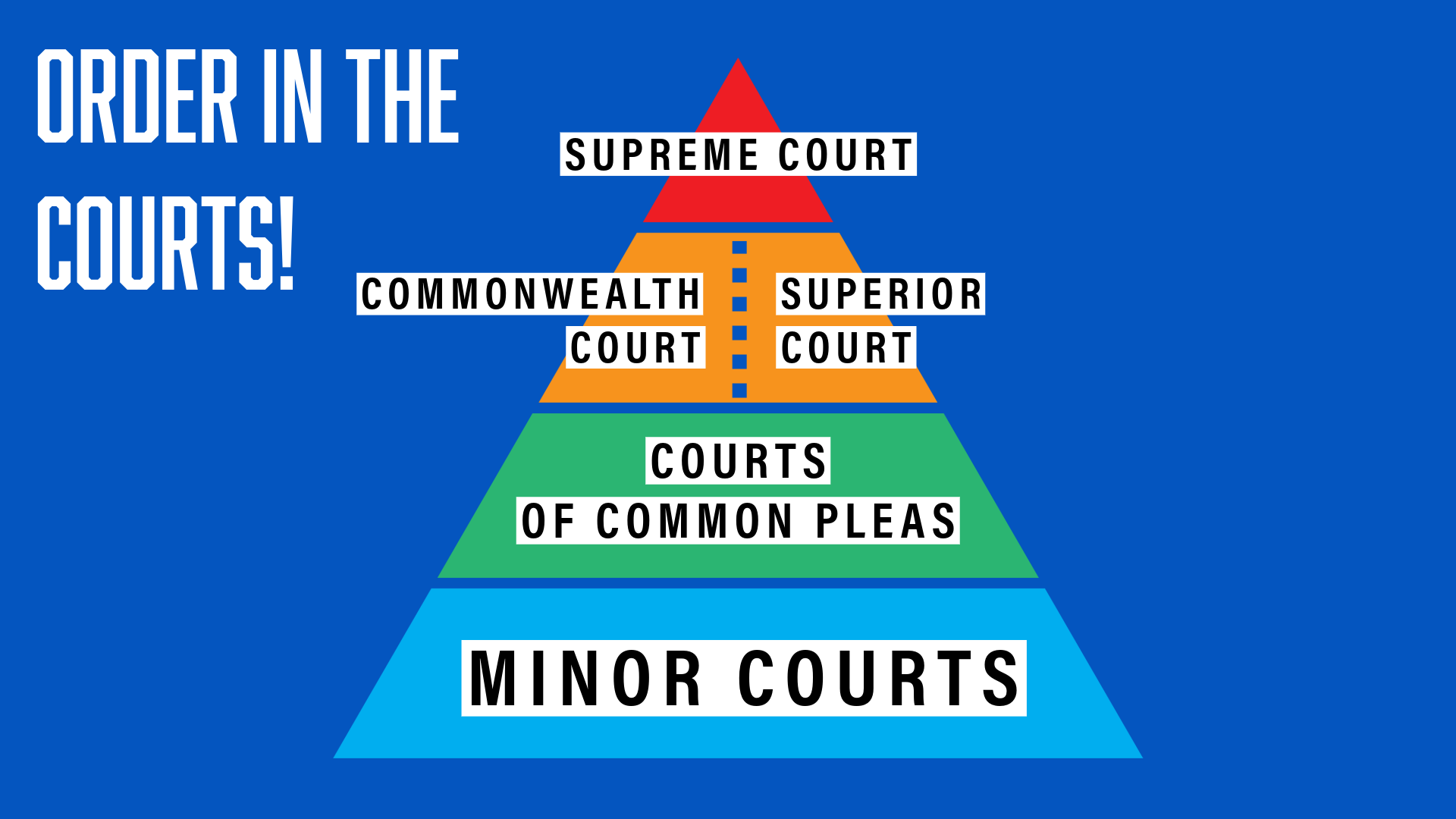
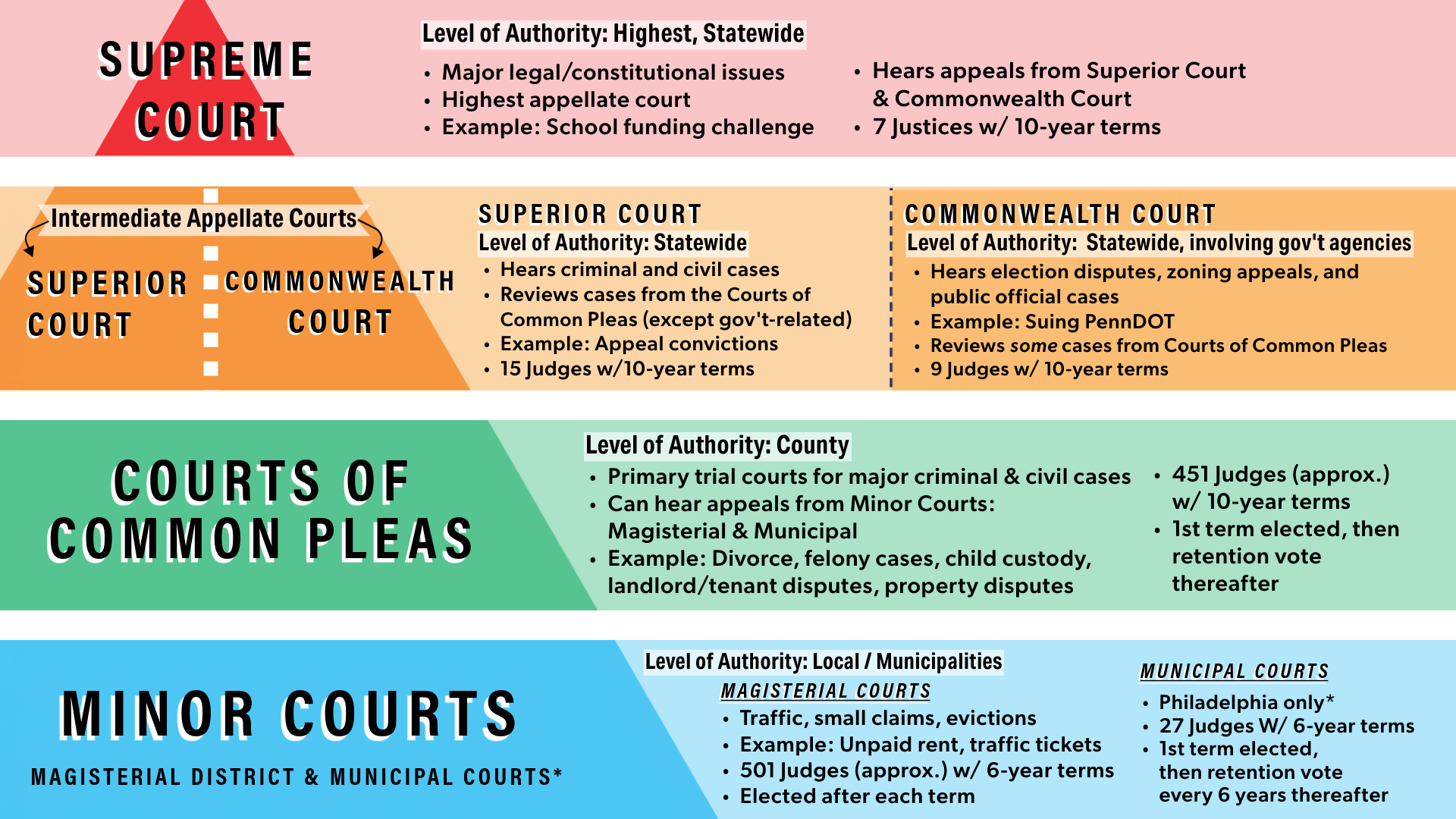
Magisterial District Courts (Part of Minor Courts)
These are the courts where many people have their first interaction with the judicial system. They handle:
Traffic tickets
Landlord and tenant disputes, like evictions
Small claims cases
Minor criminal offenses
Preliminary hearings for more serious criminal cases
Municipal Courts (Part of Minor Courts, only in Philadelphia)
Philadelphia is the only county in Pennsylvania that does not use Magisterial District Judges. Instead, a Municipal Court serves many of the same functions as Magisterial District Courts in other parts of Pennsylvania.
The Municipal Court handles:
Traffic and parking-related matters
Landlord and tenant disputes
Small civil claims
Preliminary hearings for most criminal cases
Certain misdemeanor criminal cases
For many Philadelphia residents, the Municipal Court is where they first interact with the judicial system. It helps resolve everyday legal matters and ensures that cases move through the court system fairly and efficiently.
Like all Pennsylvania courts, the Philadelphia Municipal Court applies state and local laws while protecting the rights of everyone involved in a case.
Courts of Common Pleas
These are the main trial courts in each of Pennsylvania's 67 counties. They hear a wide variety of cases, including:
Family law, such as divorce and child custody
Criminal cases
Civil lawsuits
Juvenile matters
Probate and estates
Most cases begin in the Courts of Common Pleas.
Commonwealth Court
The Commonwealth Court hears cases involving Pennsylvania state agencies and state or local governments. It also decides many cases involving:
Government actions
Election disputes
Public benefits
Environmental regulations
Right-to-Know Law requests
Check out an example of a Commonwealth Court case.
Superior Court
The Superior Court reviews appeals from the Courts of Common Pleas in most criminal and civil cases (unless they’re involved with the government). It does not hold new trials. Instead, it decides whether the law was applied correctly during the original case.
Learn about a real life Superior Court case.
Pennsylvania Supreme Court
The Pennsylvania Supreme Court is the highest court in the Commonwealth. It reviews the most significant legal questions, interprets the Pennsylvania Constitution, oversees the state's court system, and makes final decisions on many important cases.
Learn about a real life example of a PA Supreme Court case.
How the Courts Work with the State Government
Pennsylvania's three branches of government each have a different role:
The Legislative Branch writes laws.
The Executive Branch carries out and enforces those laws.
The Judicial Branch interprets the laws and resolves disputes when questions arise about how they should be applied.
For example:
If the General Assembly passes a new law, the courts may later decide how that law should be interpreted.
If someone believes a government agency acted unfairly or violated the law, a court can review the case.
If there is a disagreement about how an election law should be applied, the courts may decide how the law should be enforced.
This system helps ensure that the state government follows the law and that people's rights are protected.
Why the Courts Matter
The courts affect our everyday lives. Their decisions can influence:
Voting and elections
Public education
Housing and landlord-tenant issues
Consumer protections
Employment and workers' rights
Criminal justice
Access to public records
Environmental protections
Family matters, including adoption and custody
Whether you're contesting a traffic ticket, serving on a jury, resolving a dispute, or following a major court decision, Pennsylvania's courts play an important role to protect our rights. They ensure that laws are applied fairly and consistently.
Understanding how the courts work helps you better understand your rights, and how decisions are made that affect our communities across the Commonwealth.